
Credits: istock.org
GLP-1 drugs, which are diabetes medications that aid in weight loss, are becoming more frequently advertised on television. In fact, more than 35% of American pharmaceutical advertisement spending in 2025 went into GLP-1 marketing, according to market research company eMarketer.
Thus, many Americans have been exposed to the big names of GLP-1 drugs like Ozempic, Wegovy and Zepbound.
About 1 in 8 Americans takes a GLP-1 drug, according to a comprehensive 2025 poll by KFF, a health policy organization. This is a significant increase from when the first GLP-1 drug was approved by the Food and Drug Administration to be marketed, originally to those suffering from diabetes, in 2005.
The increase in patients using GLP-1 drugs is in part because it is associated with weight loss in a world with increased pressure to lose weight due to beauty standards.
However, despite the widespread presence of GLP-1 drugs in the media and the drastic increase in patients prescribed these medications, many are unsure what GLP-1 drugs are, how they work in the body and the possible setbacks of taking them.
What are GLP-1 drugs?
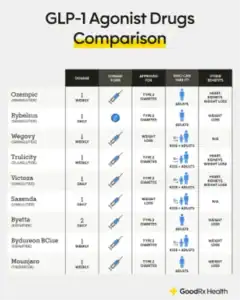
GLP-1 drugs are diabetes medications with weight-loss effects prescribed to those struggling with obesity and Type 2 diabetes. Some recognizable GLP-1 drugs on the market today are Ozempic and Wegovy (semaglutide), Mounjaro and Zepbound (tirzepatide) and Trulicity (dulaglutide). Additional GLP-1 drugs include exenatide and liraglutide.
This drug was first synthesized after researchers pinpointed the GLP-1 hormone alongside a hormone called exendin-4 in Gila monster saliva in 1994. GLP-1 naturally occurs in the body to regulate insulin production but degrades very quickly in the bloodstream.
Once GLP-1 was combined with exendin-4, the GLP-1s were present in the bloodstream for much longer. This enables users to feel full longer and can lead to weight loss.
“By treating the disease of obesity, [GLP-1 medications] can help prevent and treat a variety of weight-related diseases before they get out of control,” says family physician Dr. Suki K. Singh.
Today, there are several GLP-1s on the market including semaglutide, dulaglutide, exenatide and liraglutide. Additionally, there is tirzepatide, which is a fusion of GLP-1s and an additional hormone called gastric inhibitory polypeptide (GIP).
Researchers at Eli Lilly are also experimenting with a triple fusion drug called retatrutide. This drug will target the glucagon hormone, a pancreatic hormone, as well as GLP-1 and GIP.
What are GLP-1 drugs?
When ingested or injected, the GLP-1 drugs bind to receptors in the brain, stomach, liver and pancreas. The GLP-1 drug first binds to receptors in the brain and suppresses the patient’s appetite. This slows gastric movement and stomach emptying into the small intestine. This causes an increase in insulin production in the pancreas.
The increase in insulin production allows the liver to lower glucose production and prompts the muscles to use and store more glucose.
GIP is another gastrointestinal hormone that is rapidly released by the stomach during the early stages of meal consumption. It is associated with reducing illness-like behaviors like discomfort, nausea and vomiting.
It was initially added to GLP-1 to reduce adverse reactions to the medicine when administered. However, University of Pennsylvania researchers found that when combined with GIP, GLP-1 drugs are effective for weight loss.
Researchers at the Scandinavian Journal of Primary Health Care in 2025 found that GLP-1 users felt fuller and satisfied after their meals and that they had an easier time managing cravings. The same study also found that though there were side effects like nausea, diarrhea and vomiting, users were less deterred by side effects if it meant substantial weight loss.
While gastrointestinal issues are common side effects, the biggest setbacks happen when the patient stops taking a GLP-1. Despite regular diet and exercise, researchers in JAMA Network Open found that former users regained the weight they lost using the medication. Researchers are still trying to investigate why this happens.
What are the drawbacks?
Like any medicine, there are factors to consider before individuals decide to take GLP-1 drugs. One of the biggest considerations is the cost, which can range from $1,000 to $1,350 a month without insurance. Though prices are expected to decrease by about half in the next year, even the $500 to $700 price tag can be steep for the average person.
The steep cost is part a major concern of users. There is not enough availability and it is difficult to determine who gets priority. Plus, if a doctor prescribes a more effective weight loss medication, it may not be covered by the patient’s insurance.
Additionally, the drugs have been called anti-obesity medications (AOMs) by some researchers who criticize the drugs for the possibility of severe side effects, the lack of research into long-term use and the possibility of triggering eating disorders in some patients.
Many pharmaceutical companies have decided that the benefits outweigh the risks. Manufacturers like Eli Lilly and Novo Nordisk plan to manufacture and distribute GLP-1 drugs in the future.
Takeaways
GLP-1 drugs are a group of diabetes management medications associated with weight loss. They are often prescribed to patients with obesity and/or Type 2 diabetes. Once they enter the body via injection or ingestion, the medications affect the brain, stomach, and pancreas to help patients feel filler. Thus, studies show these medications to be effective in helping patients lose weight.
This has led to an increase in prescribed patients since thinness is an ideal beauty and health standard.
However, there are some drawbacks of GLP-1 drugs. They can have steep costs for the monthly dosages and because they are relatively new medications, insurance companies may not approve funding for them.
Additionally, patients who stop taking the medications often regain the weight they lost even with diet and exercise.
Though the medication is associated with weight loss and aiding with conditions like type 2 diabetes, it is not a perfect solution to the problem. Potential patients are advised to talk to their doctor before pursuing any new medication.
Amaya Gentry holds a bachelor’s degree in biology and has previously worked as a quality control chemist.