Konner Hines
Cleveland renters continue to face housing instability and rising affordability pressures as the city finalizes its 2026 budget, even as the city includes increased neighborhood investments under 2026 budget under Ordinance 117-2026.
With housing-related needs jumping 21 percent over the past five years, recent data shows a neighborhood-level divide that dictates whether a resident’s housing is stable, affordable or at risk.
Rising Rents and High-Investment Wards
Housing challenges vary significantly by ward. Cleveland’s median rent is currently hovering around $1,111, but neighborhoods experiencing high investment are seeing much steeper costs. In Wards 3, 13 and 14, which include Downtown, Ohio City, Tremont and parts of the West Side areas with strong development activity are seeing higher rents between $1,500 to $2,200 or more.
While these areas have lower eviction rates, affordability is becoming a severe issue for existing residents. 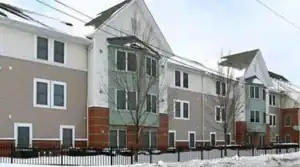
Concentrated Evictions on the East Side
Conversely, the city’s East Side faces intense housing pressure. Out of Cleveland’s roughly 95,000 renter households, approximately six percent face eviction filings annually. These filings are heavily concentrated in Wards 5, 6 and 7, which have a greater concentration of low-income renters and more residents relying on housing assistance. Residents in these wards are much more likely to face housing instability and displacement risks.
Meanwhile, Wards 1, 2 and 4 are experiencing transitioning, mixed conditions where some residents benefit from new investments while others struggle with rising costs.
The 2026 Budget and City Policy
The budget includes measures aimed at neighborhood stabilization through Ordinance 117-2026. The 2026 budget includes $300,000 per ward for local projects, alongside dedicated funding for blight removal and neighborhood stabilization.
However, with thousands of residents requesting rent assistance annually, the key question remains whether these investments will adequately reach the neighborhoods facing the highest eviction pressures.
Community Benefit (Impact)
Your neighborhood dictates whether housing is stable or at risk. It empowers you in your community by detailing exactly which wards are facing eviction pressures versus rising costs, and helping residents understand the localized impact of the city’s new budget.
Solutions & Resources Integration
Solution: Ordinance 117-2026 allocates funding for neighborhood stabilization, blight removal and $300,000 per ward for localized projects.
Insights: While investment is increasing, it is not evenly distributed across all areas. The data suggests that the housing crisis is not disappearing, but rather becoming more uneven, with distinct challenges—either affordability or eviction—depending on the ward.

Resources: Residents facing housing instability can seek data and support through the United Way of Greater Cleveland and track eviction trends via the Eviction Lab at Princeton University.
Cleveland’s housing challenges are deeply tied to geography, with East Side neighborhoods facing higher eviction pressures and West Side/Downtown areas grappling with rising rents.
While the city’s 2026 budget aims to stabilize neighborhoods through blight removal and ward-specific funding, the impact of these investments remains uneven. Ultimately, where a person lives in Cleveland determines their housing reality.
Konner Hines is a member of the Honors College and a marketing and human resources student at Baldwin Wallace University