Ron Calhoun
If the first few months of 2026 are any indication, Cleveland is in the midst of a major structural transformation.
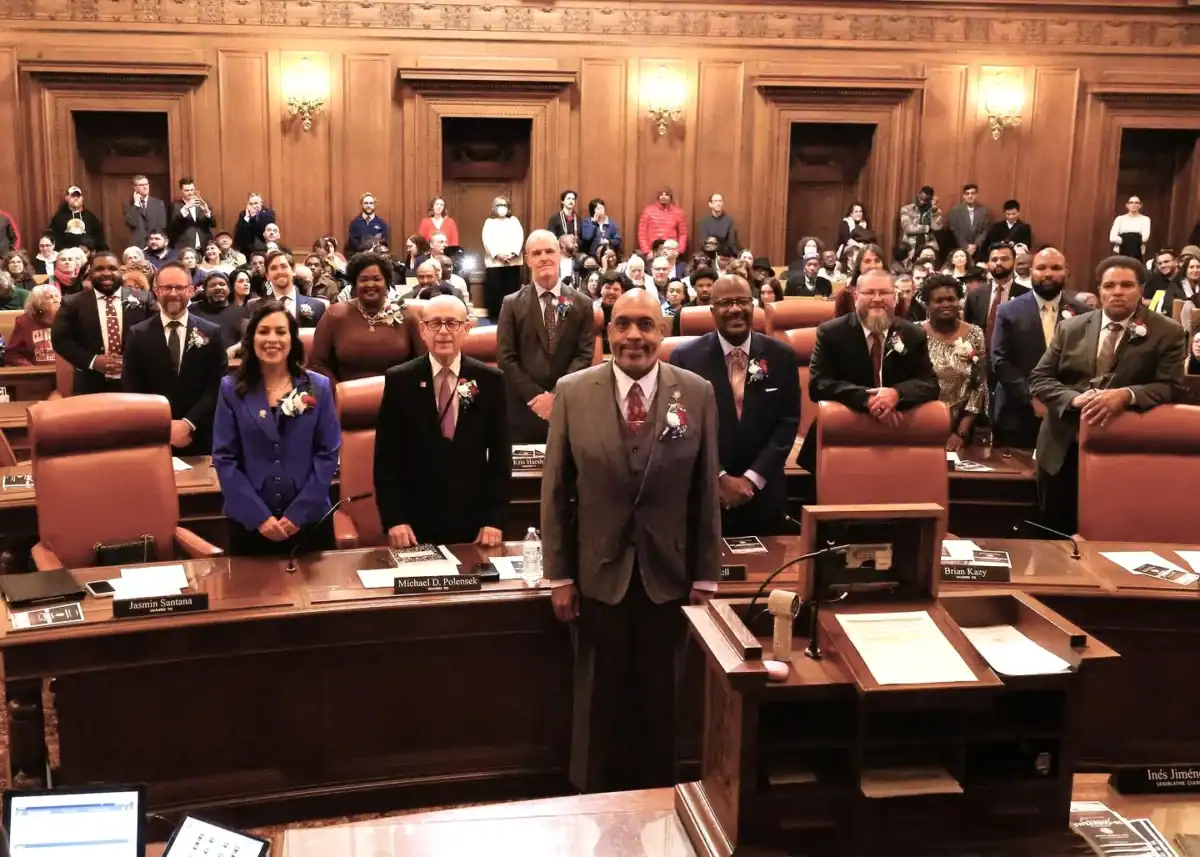
When the newly elected 2026–2029 City Council was sworn in Jan. 5 under the leadership of Council President Blaine A. Griffin, it moved quickly to set an aggressive legislative agenda. Council adopted new governing rules establishing standing committees focused on public health, youth empowerment and equity.
That agenda gained momentum in early March with passage of the city’s 2026 budget. Totaling more than $2.34 billion across all funds, including a General Fund exceeding $920 million, the budget serves as the financial engine behind a shift toward community-based safety nets, modern infrastructure and neighborhood stabilization.
From unarmed crisis response teams to reinvesting parking revenue into pedestrian safety, the first quarter’s legislation represents tangible, funded changes to Cleveland’s physical and social landscape.
Here is a breakdown of City Council rethinking Public Safety and Human Rights, what has been done so far in 2026, how it may affect your neighborhood, commute and daily life.
Deploying Unarmed Crisis Responders
Cleveland has formally changed how it responds to mental health emergencies.
The City Council created the Bureau of Community Crisis Response within the Division of Emergency Medical Service. Named in honor of Tanisha Anderson, the program deploys unarmed teams, including social workers, behavioral health professionals and peers with lived experience, to respond to nonviolent 911 calls involving mental health or quality-of-life concerns.
Police officers will also receive eight hours of initial crisis-intervention training and four hours annually.
Taking Positions on State and National Issues
Council also used its platform to address broader policy concerns:
- Opposing ICE mandates: Council passed an emergency resolution opposing several Ohio bills that would require cooperation with federal immigration enforcement.
- Protecting incarcerated individuals: Council urged passage of House Bill 461 to ensure communication access for deaf and speech-impaired inmates.
- Condemning rhetoric: Council approved a resolution condemning a social media post by President Donald Trump as racist.
Funding Community Intervention
Council approved Violence Against Women Act grant funding to support a sexual assault advocate within the Division of Police and bolster the Cleveland Domestic Violence Program.
It also contracted with Youth Opportunities Unlimited to run the 2026 summer youth employment program, which officials describe as a violence-prevention and workforce development strategy.
The Parking Benefits Fund
Beginning July 1, the city will redirect 75% of net parking meter revenue into a new Parking Benefits Fund. By law, the money must be used for pedestrian and mobility improvements, including sidewalk repairs, ADA curb ramps, crosswalks, traffic calming and street lighting.
Major Multi-Modal Projects
Cleveland is investing in infrastructure that supports pedestrians, cyclists and transit users:
- East 66th Street: ADA upgrades, signal improvements, multiuse paths and transit enhancements.
- Downtown Connector Trails: Expansion of trail networks, including a road diet on West Huron Road and Ontario Street.
- North Coast Connector: A $1.59 million planning contract to advance waterfront access improvements.
Transit-Oriented Development
The city approved a zoning change for the “Canopy at Herman Park” development, eliminating minimum parking requirements in exchange for transit-focused design features such as bike storage, unbundled parking and delivery infrastructure.
Council also established the Lorain Antiques Design Review District to preserve the corridor’s historic character.
The Housing Push and the War on Blight
Developers including CHN Housing Partners, Pennrose and The Community Builders submitted plans for hundreds of affordable units across multiple wards.
Council also approved redevelopment plans for the former McCafferty Health Center site on Lorain Avenue.
Through the city’s Land Bank, residents can purchase adjacent vacant lots for as little as $200, increasing property value while reducing blight.
Council allocated $500,000 to Community Housing Solutions to provide critical repairs for low-income homeowners in several wards.
The budget includes $806,853 for a receivership pilot program, allowing courts to transfer control of severely neglected properties to responsible entities for rehabilitation.
Meanwhile, enforcement actions continue against property owners cited for unsafe or deteriorating conditions.
Economic Development and Neighborhood Identity
The city approved a $4 million agreement with the Site Readiness for Good Jobs Fund to prepare land along the Opportunity Corridor for job-generating development.
Council passed multiple resolutions opposing new liquor permits in high-crime areas already saturated with alcohol outlets. Officials cited concerns about public safety and neighborhood stability.
Zoning officials have also taken action against noncompliant smoke shops and nuisance businesses.
A staffing contract ensures temporary workers are paid 124.9% of the city’s living wage. It also requires $1.5 million in subcontracting to certified minority- and locally owned businesses, reflecting broader equity requirements in city-funded projects.
Investing in Culture
City funds supported local cultural initiatives, including:
- A Latin American Historical Society oral history project
- Programming by the Italian Cultural Garden Association
What It Means for You
Cleveland’s first quarter of 2026 shows how legislation translates into daily life.With a $2.34 billion budget backing its priorities, the city is investing in alternative emergency response, safer streets, affordable housing and stronger enforcement against blight.
These policies will shape how residents move through their neighborhoods, access services and build long-term stability.But their success depends on public participation, from attending zoning hearings to applying for land bank programs or engaging with ward representatives.
The blueprint is in place. What happens next will depend on how residents help bring it to life.
Source List: The City Record.