Marissa Valentine
As law enforcement agencies expand the use of automated license plate reader cameras across Northeast Ohio, some residents and advocacy groups are raising concerns about how the technology is used and what it means for personal privacy.
Flock Safety, a private surveillance technology company, installs camera systems designed to help police identify vehicles linked to crimes. The systems are now in use across multiple Ohio communities, according to public records, prompting debate over their effectiveness and the scope of data collection.
“When I founded this company, we hoped to make an impact on families, communities, and the officers that serve us every day. We set a lofty goal of helping communities solve 25% of reported crime in the US by the end of 2025,” said Garrett Langley, founder and CEO of Flock Safety.
The Expansion
Public records show that Flock Safety’s surveillance network has expanded across several counties in Northeast Ohio. In Northeast Ohio, at least 816 automated license-plate readers are publicly documented across local agencies and regional networks, according to public records compiled by the Atlas of Surveillance and community-mapped sources such as DeFlock, whose map is embedded by Banish Big Brother.
Questions about the purpose of these cameras in neighborhoods have Ohioans concerned about the motive behind the constant surveillance of their personal privacy.
According to a report by WEWS News 5 on March 5, Cleveland residents were hesitant about the company’s use of video footage, leading Cleveland City Council to pause expansion. Additionally, some citizens have concerns about footage being used by Immigration and Customs Enforcement.
Law enforcement
While local police departments have cited Flock Safety’s use to keep neighborhoods safe and reduce local crime, citizens have raised growing concerns about invasions of privacy and violations of their safety stemming from outside access to Flock’s systems. Flock cameras are Automatic License Plate Readers (ALPR) that provide data to law enforcement.
Supporters, including law enforcement, say the technology has helped solve crimes such as stolen vehicles and hit-and-run cases, though critics question its impact on preventing crime.
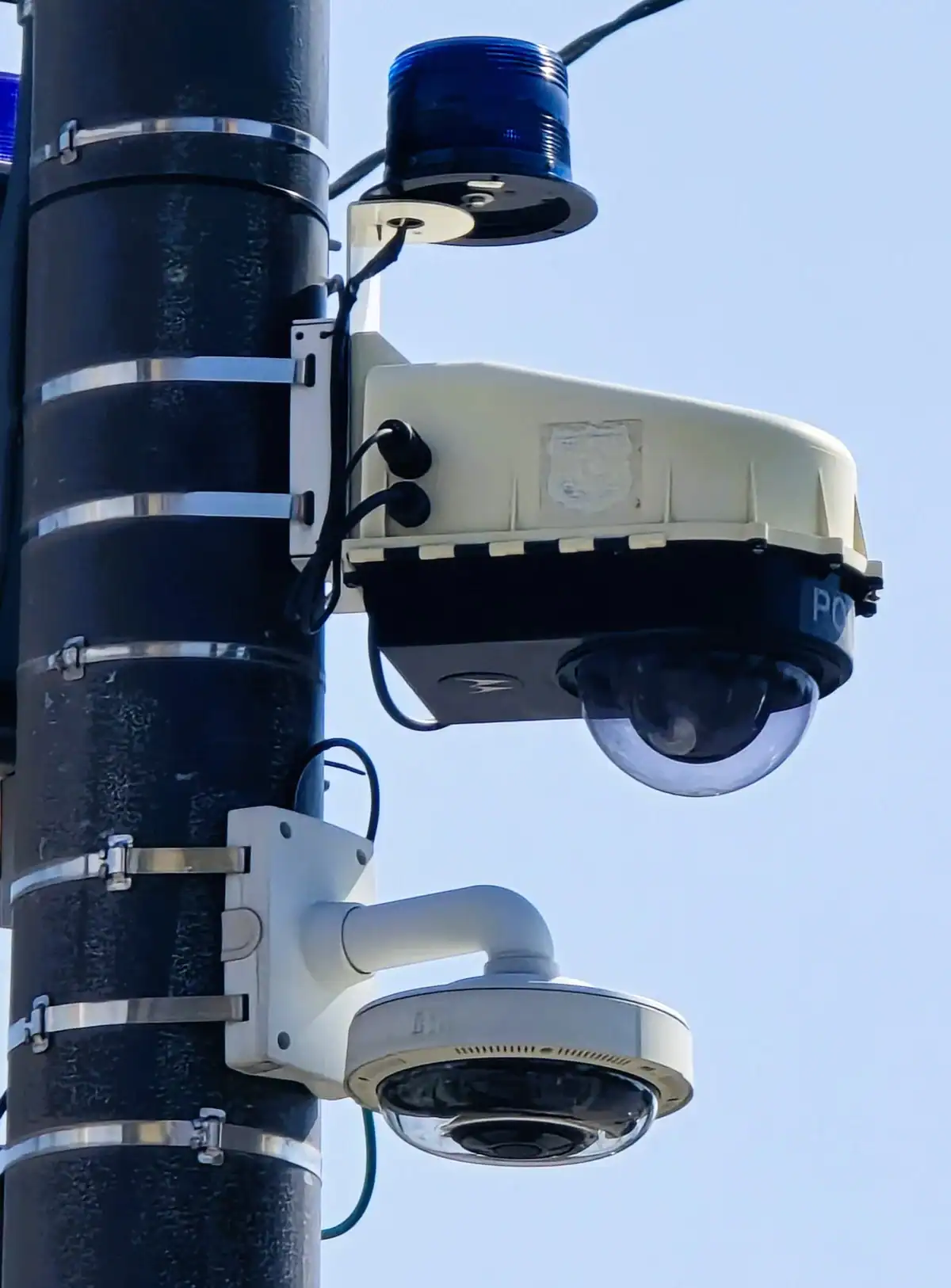
Flock cameras are not labeled and they look generic. They are mounted on black poles near traffic lights and are hidden in plain sight.
Usage concerns
Online groups such as Have I Been Flocked? keep an updated list on their site, under the subtitle “protected activity reports,” containing audit reports based on patterns deemed possible violations of the First Amendment.
Other reports on the site are categorized as profiling reports, immigration-related reports and low-level offense reports. Each section explains why categorizing these reports matters, as Flock Safety’s website advertises its product as a tool to boost law enforcement efficiency, increase neighborhood safety, and deter crime that affects businesses.
Looking at the audit report patterns listed on the “Have I Been Flocked?” website, there is documentation that alleges law enforcement agencies are using Flock outside the parameters of public safety, causing citizens to question whether their privacy is being violated.
According to an anti-ALPR organization known as DeFlock, they allege “there is no substantial evidence that the usage of ALPRs effectively prevents crime.”
However, Flock conducted its own comprehensive study under oversight from criminology researchers at Texas Christian University and the University of Texas Tyler, and their findings indicate that law enforcement agencies with greater access to Flock systems saw a 9% increase in solved crimes.
Public access
Privacy concerns, by local citizen-led grassroots organizations like Flockno formed last year to protest what they believe is a “Big Brother situation.”
Flockno member Bryn Adams, during a Cleveland vote to approve the expansion of their usage of Flock’s surveillance systems, said, “We want the city to remove, not renew,” according to a report by WEWS News 5 on March 2.
The increase in government oversight, labeled as protection, has other anti-Flock organizations citing the dangers of internet cloud-based surveillance.
DeFlock says cloud-based surveillance records your driving patterns. Since most people do not just drive locally, your driving patterns can be accessed by police departments in different locations. Flock’s website advertises that its software provides real-time access to other ALPR location data to its systems nationwide.
As surveillance technologies expand, tools like Flock cameras are often promoted as a way to improve public safety. Their growing use, however, has raised questions about effectiveness and how data is managed.
Some residents and advocacy groups have raised concerns about data storage, access and sharing across agencies. Supporters, including law enforcement, say the technology can help identify vehicles linked to crimes and assist investigations.
As more communities consider or expand these systems, the balance between public safety and personal privacy remains a key issue.
Marissa is a United States Navy Veteran with 11 years of journalism experience. She has a master’s degree in marriage and family therapy from Abilene Christian University and a bachelor’s degree in communications from the University of Texas Rio Grande Valley.