
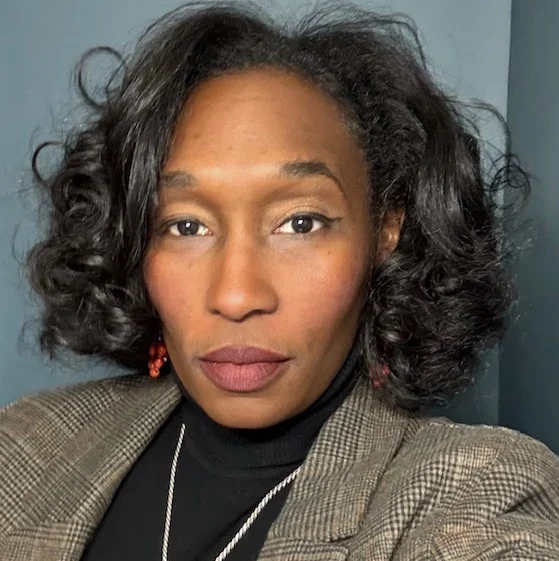

Jennifer Bailey
Editor’s note: “Baby, now what?” is a new series exploring the mental, physical and everyday realities of motherhood.
The lines on the pregnancy test confirmed she was pregnant.
Then came nine months of growing a life inside her body. The anticipation can feel as tall as a skyscraper.
The mindset can shift from thinking about yourself to thinking about the baby. There are murmurs of sleepless nights, weird poop and other inconveniences, but those stories belong to other mothers; surely her experience will be different.
How hard could motherhood be? TV moms like Clair Huxtable, Harriette Winslow, Florida Evans and Vivian Banks made it look easy. The water breaks, labor begins, or the cesarean section is scheduled, and then the baby comes.
According to the National Vital Statistics System, more than 3.6 million babies were born in the United States in 2025. Much of the attention during pregnancy and immediately after centers on how to care for the baby. Although the baby is a top priority, the mother — who brought this baby into the world — can often be overlooked.
“We see the tiny baby, and we think of that as the vulnerable thing,” said Karen Kearney, a licensed independent social worker certified in perinatal mental health. Kearney is an adjunct professor at Case Western Reserve University and is involved in social justice advocacy. “And it is, but so is the mother.”
The maternal instincts everyone told her would kick in don’t seem to be kicking in. Being one person’s everything, from entertainment to emotional soother to food source, can take a toll. And even though she is around this tiny, adorable person all the time, for some mothers there is a sense of loneliness.
“Many parents are surprised by how lonely and isolating parenting can be,” said Erika Kelley, a clinical psychologist at University Hospitals who specializes in working with postpartum mood disorders.
“I’ve been thinking a lot about how, in our work recently is [that] functioning doesn’t equal well-being. We’re learning more and more that just because you’re getting up, taking care of a baby, getting up in the middle of the night, going to work, does not mean you’re okay,” said Melissa Endsley, a licensed professional clinical counselor certified in perinatal mental health who leads Grove Counseling Collective.
Endsley has more than 15 years of experience working with pregnancy, postpartum transitions, anxiety and obsessive-compulsive disorder.
For some, loneliness is a whisper, a soft voice; for others, it’s a drill sergeant screaming all her shortcomings in her ear.
This can be motherhood, a life transition many know exists, yet conversations about how difficult and rewarding motherhood can be are often limited.
Christina Washburne, a licensed independent social worker and certified perinatal mental health specialist at Grove Counseling Collective, noted the importance of pushing back against the idea that parenting is effortless.
“We need to fight back against the rhetoric that’s saying, this is supposed to all be rainbows and butterflies,” Washburne said, emphasizing that society must allow “there to be challenge and joy in motherhood.”
Series note: In future installments, “Baby, now what?” will draw on local experts for insight and practical guidance on topics ranging from postpartum depression to identity and other challenges and joys of motherhood.
Jennifer Bailey is a licensed clinical social worker and registered drama therapist.