


Jennifer Bailey
Editor’s note: “Baby, now what?” is a new series exploring the mental, physical and everyday realities of motherhood.
The murder trial of Lindsay Clancy, a Massachusetts woman accused of killing her three young children in 2023, ended in a mistrial Sept. 4 after jurors could not reach a unanimous verdict. Her attorneys argued that she was suffering from postpartum psychosis and was not criminally responsible for the killings.
The case has renewed discussion about recognizing and treating serious perinatal mental health conditions. Postpartum mental health concerns extend beyond the commonly discussed “baby blues,” while stigma and fear of judgment can make it harder for people experiencing symptoms to seek care.
Erika Kelley said fear of disclosure is a barrier, especially in healthcare settings. “Women fear, ‘What will happen if I tell my doctor this?’ Are they going to think I’m crazy? Are they going to take my baby away?’” said Kelley, a clinical psychologist at University Hospitals who works with patients experiencing postpartum mood disorders.
Many new mothers experience a shift in mood after giving birth. According to the Cleveland Clinic, postpartum mood disorders fall into three categories: baby blues, postpartum depression (PPD) and postpartum psychosis (PPP), differing in severity and duration.
The Cleveland Clinic says Baby blues usually begin a few days after delivery and subside within one to two weeks. Kelley noted that baby blues can present as minor mood swings, irritability and feeling tired.
“A distinction with baby blues as compared to depression is that baby blues doesn’t affect your functioning,” said Kelley. According to the Cleveland Clinic, baby blues affects 3 out of 4 women after giving birth, making initial mood changes a common occurrence.
Postpartum depression is a longer-lasting condition that can begin within the first few weeks after delivery or can develop gradually, including during the first year postpartum, according to the Cleveland Clinic. According to the Centers for Disease Control and Prevention, about 1 in 8 women with a recent live birth report symptoms of postpartum depression.
Karen Kearney, a licensed independent social worker, psychotherapist, educator and mental health advocate, said PPD is often discussed within a broader framework of perinatal mood and anxiety disorders (PMADs).
PMADs can include depression, anxiety disorders, obsessive-compulsive disorder and post-traumatic stress disorder that occur during pregnancy or after birth. Bipolar disorder and postpartum psychosis require particularly careful clinical assessment and should not be treated as interchangeable with PPD.
The Cleveland Clinic lists potential symptoms including persistent sadness, anxiety, fatigue, guilt, loss of interest, changes in sleep and difficulty caring for oneself or one’s baby.
According to the Cleveland Clinic, postpartum psychosis (PPP) is a rare but treatable psychiatric emergency that can disrupt a person’s sense of reality after birth. Symptoms may develop rapidly and can include confusion, severe agitation, delusions, hallucinations, mania, paranoia or markedly disorganized behavior. Immediate medical and psychiatric evaluation is essential. It affects roughly 1 in 1,000 people after delivery.

Intrusive thoughts can be distressing and are not, by themselves, evidence that a person will act on them. As defined by the Cleveland Clinic, intrusive thoughts are unwanted images or urges. Kearney explained the distinction between ego-dystonic thoughts — unwanted thoughts inconsistent with a person’s values — and ego-syntonic thoughts, which feel consistent with a person’s beliefs or desires.
If a thought feels congruent a clinician must assess the surrounding symptoms and level of risk.
Thoughts of harming oneself or a child, particularly when accompanied by delusions, hallucinations, confusion or an inability to maintain safety, warrant immediate emergency evaluation. Call 911, call or text 988, or seek care at an emergency room.
Meal trains, gift cards and “thinking of you” text messages often arrive shortly after birth, but the support may decrease over time. Kelley emphasized that ongoing practical support can help families navigate postpartum challenges.
Melissa Endsley, a licensed professional clinical counselor, also a certified perinatal mental health provider and owner of Grove Counseling Collective, emphasized that postpartum challenges impact the entire household.
“If we could get the buy-in from the spouse, the family, maybe the friends, whoever’s part of that village, we are all affected by this, not just one person,” said Endsley. “We all have a role in supporting and helping and navigating this, not just one person.”
Postpartum depression can be difficult to identify, particularly when people minimize or conceal symptoms. Kelley used the informal phrase ‘smiling depression’ to describe patients who may appear to be functioning while experiencing symptoms.
Rather than relying on a general “How are you?” Kearney suggests using the acronym NESTS. “It stands for nutrition, exercise, sleep, time to self and support. And so you want to check in with all those boxes, and keep checking in with all those boxes.”
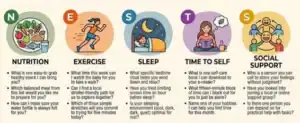
Experts emphasize that action is essential. Christina Washburne, a licensed independent social worker and certified perinatal mental health specialist at Grove Counseling Collective, encouraged loved ones to offer concrete help.
“Drop off food. And don’t ask; just drop it off.” Washburne said, “Ask if you can visit, sure, and be OK with no. If someone’s lawn needs mowed, say, ‘Let me come mow your lawn.’ We need to continue to be the village.” Simple acts like holding the baby so mom can rest, cleaning, cooking and running errands can make a big difference.
Support from family, friends, healthcare professionals and community resources can make it easier for people to seek care and manage postpartum mental health conditions.
For immediate danger, call 911. For suicide or mental health crisis support, call or text 988. The National Maternal Mental Health Hotline is available at 1-833-TLC-MAMA (1-833-852-6262).
Series note: In future installments, “Baby, now what?” will draw on local experts for insight and practical guidance on topics ranging from postpartum depression to identity and other challenges and joys of motherhood.
Jennifer Bailey is a licensed clinical social worker and registered drama therapist.