Staff Writer
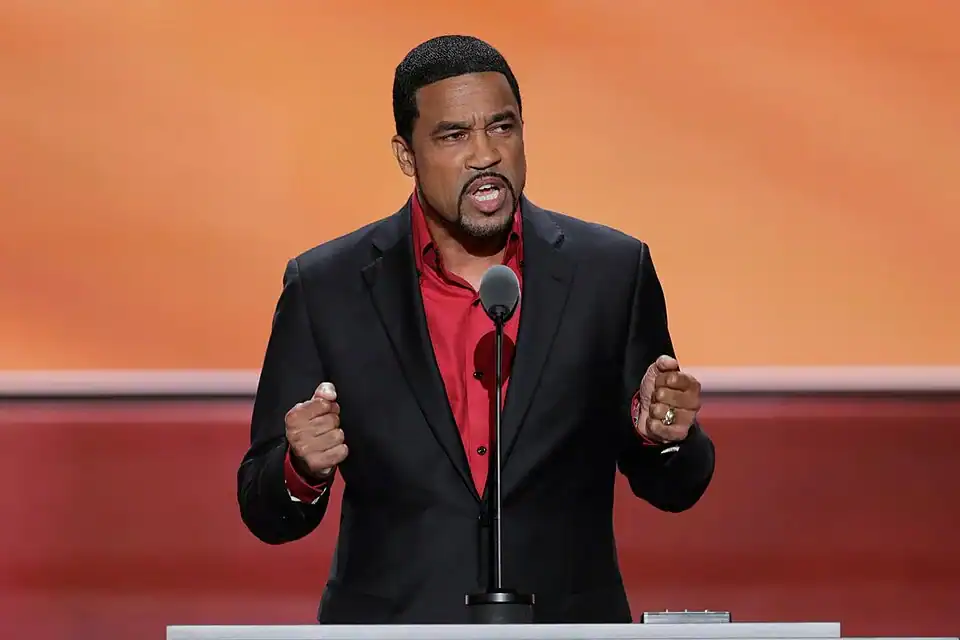
CLEVELAND HEIGHTS, Ohio — President Donald Trump said in a Sept. 1 Truth Social post that Cleveland Heights pastor Darrell Scott would serve as an adviser on tobacco health issues on the CDC’s Advisory Committee to the Director.
Trump described Scott as a longtime friend, faith leader and advocate for underserved communities. He said Scott’s work would help the administration consider how to better protect Americans from dangerous tobacco products while supporting “solutions to reduce harm and save lives.”
Premier Christian News reported on the appointment, which gives the national story a direct Cleveland connection. Scott is the founder and senior pastor of New Spirit Revival Center in Cleveland Heights and has been associated with Trump politically for more than a decade. He co-founded the National Diversity Coalition for Trump and previously participated in Trump’s presidential transition efforts.
But the announcement also leaves several questions unanswered about exactly what Scott’s assignment will entail.
Scott’s CDC role advisory only for tobacco policy
Despite some headlines describing Scott simply as a new “CDC tobacco adviser,” he is not being placed in charge of the agency’s tobacco programs.
The Advisory Committee to the Director provides recommendations to the CDC director and the secretary of the Department of Health and Human Services on broad agency strategy. Its responsibilities include advising on CDC priorities, performance, strategic planning, grants and ways of addressing health disparities.
The committee itself does not regulate cigarettes, e-cigarettes or nicotine products.
Its charter allows no more than 15 nonfederal members. At least 12 are to have knowledge in areas relevant to the CDC mission, including public health, global health, health disparities, biomedical research and public health preparedness. Up to three public members may come from fields including innovation, public policy, public relations, law, economics or management. Members are selected by the HHS secretary, Robert F. Kennedy, Jr.
That distinction could become important in understanding the basis for Scott’s appointment.
Scott’s biography at the New Spirit Revival Center emphasizes decades of ministry, biblical studies, work in juvenile detention centers and shelters, radio ministry and participation in citywide anti-drug campaigns.
The New Spirit Revival Center biography reviewed for this article does not mention formal training or prior work in medicine, epidemiology or tobacco control policy.
The Truth Social post did not state Scott’s term, committee category, voting status, working-group role or planned collaboration with tobacco-control specialists. Trump used the phrase ‘solutions to reduce harm,’ but neither the post nor subsequent public materials reviewed by the Observer defined it.
Formal details have not yet appeared on CDC roster
As of this publication, the CDC’s public website listing members of the Advisory Committee to the Director had not been updated to include Scott. The page itself, however, is dated Sept. 13, 2024.
The publicly available announcement also does not specify Scott’s term, which category of committee membership he will occupy or whether he will lead a tobacco-specific working group.
Those details will help determine the actual reach of his assignment.
Appointment comes during upheaval in CDC tobacco programs
Scott also arrives at an unusual moment for federal tobacco control efforts.
The Associated Press reported in August that Congress appropriated $246 million for the CDC’s Office on Smoking and Health, but the office was among a number of congressionally funded CDC programs left with few or no employees following widespread federal health agency staffing cuts beginning in 2025.
The office historically tracked tobacco use, supported state programs and quitlines and operated the CDC’s Tips From Former Smokers campaign.
CDC research estimates that between 2012 and 2018, the campaign prompted more than 16 million smokers to attempt quitting and approximately 1 million to quit successfully. The agency estimated the campaign also helped prevent about 129,000 early deaths during that period.
That makes one question surrounding Scott’s appointment especially important: Will his role complement, replace or help rebuild the CDC’s traditional tobacco control work?
The administration has not yet publicly explained that.
Tobacco disparities have particular relevance for Black communities
The emphasis on underserved communities also has a substantial public health basis.
CDC data show tobacco companies have historically marketed menthol cigarettes heavily in Black communities. In 2020, about 81% of Black adults who smoked cigarettes used menthol cigarettes, compared with 34% of white adults who smoked, according to CDC data. The agency says menthol can increase nicotine’s effects, make cigarettes easier to start using and make quitting more difficult.
Those disparities could make Scott’s Cleveland and faith community background relevant to outreach, even as questions remain about what technical public health expertise will accompany that experience.
There also is precedent for involving churches in tobacco prevention. CDC materials have specifically encouraged faith communities to participate in smoking cessation and anti-menthol initiatives.
Key role details remain unresolved.
Several key questions remain unresolved. Among them are whether HHS has completed Scott’s formal appointment; what term and membership category he will hold; whether tobacco scientists or public health specialists will work alongside him; and what Trump and Scott mean specifically when they refer to “harm reduction.”
The FDA continues to evaluate applications for e-cigarettes and other tobacco products under the federal tobacco premarket authorization process. Just days before Scott’s appointment was announced, the Food and Drug Administration authorized a JUUL2 e-cigarette device and tobacco- and menthol-flavored pods after determining that the potential population health benefits, including some adult smokers switching completely from cigarettes, outweighed identified risks.
There is no evidence that the FDA decision and Scott’s appointment are connected.
For Cleveland, however, the development places a longtime local pastor in the middle of a national debate involving tobacco addiction, health disparities, federal public health policy and the changing approach to nicotine products.
The Cleveland Observer will continue tracking Scott’s appointment and the policies he ultimately advocates.
Updated: 09/24/2026