S.A. Lewis
The views expressed in this article are those of the author and do not necessarily reflect the views of The Cleveland Observer.
Every culture holds fast to its history, and it is incumbent upon each of us to know our own.
Maya Angelou is quoted as having said, “I have great respect for the past. If you don’t know where you’ve come from, you don’t know where you’re going.”
The idea is simple: Lessons learned from the past can improve our future. Philosopher George Santayana wrote: “Those who cannot remember the past are condemned to repeat it.” Museums are not always the first choice when planning a vacation, but maybe they should be, and the International African American Museum is a must-see destination.
Location and significance
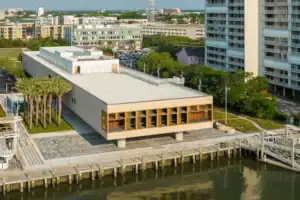
At a recent family reunion in Charleston, South Carolina, we visited the International African American Museum. The museum stands at the historic site of Gadsden’s Wharf along the Cooper River, where tens of thousands of enslaved Africans arrived at Gadsden’s Wharf aboard slave ships from the late 1760s through 1808.
Charleston was a major hub in the transatlantic slave trade. The museum opened in June 2023 after more than two decades of planning and community effort. The museum was funded through a broad public-private partnership rather than a single primary corporate sponsorship.
The city of Charleston was among the museum’s major founding funders. The state of South Carolina and major philanthropic organizations like Blue Cross Blue Shield of South Carolina, The Duke Endowment and TD Bank also provided support.
While it did not open to the fanfare of the Smithsonian National Museum of African American History and Culture in Washington, D.C., I believe it is equally important in the preservation of the history of the African American people in America.
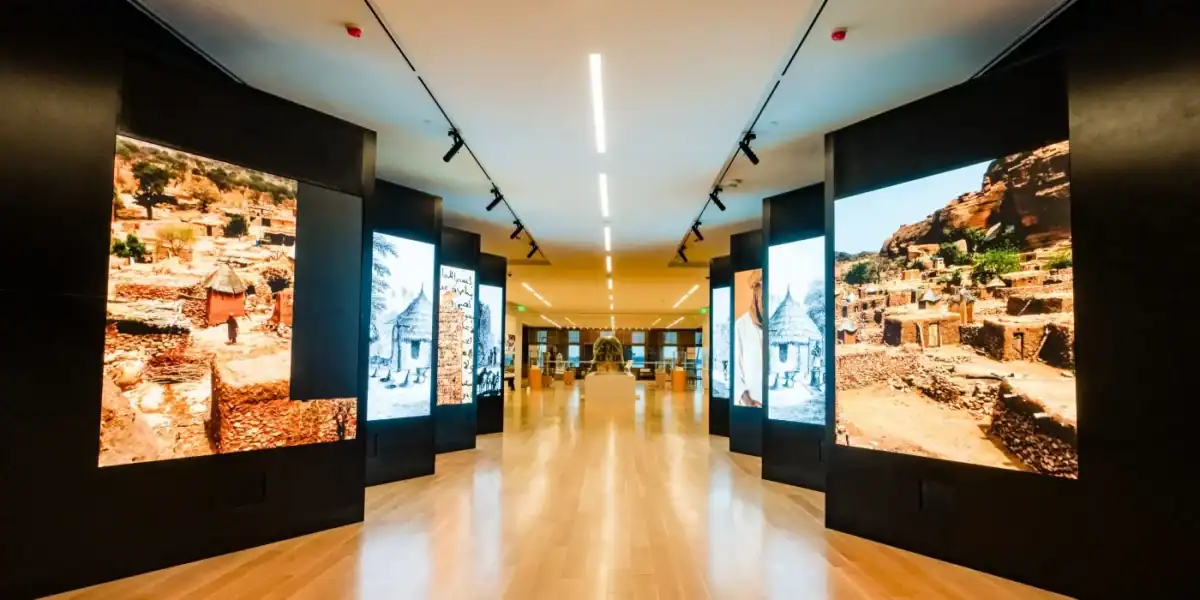
One such focus is showcasing the heritage that developed among Africans and their descendants in South Carolina’s Lowcountry and became known as Gullah Geechee culture.
The Gullah Geechee Gallery explores Gullah Geechee history and culture and contemporary issues facing Gullah Geechee communities. Across the museum’s galleries, exhibits also examine how enslaved Africans and free Black people shaped U.S. economic, political and cultural development.
Atmosphere and exhibits
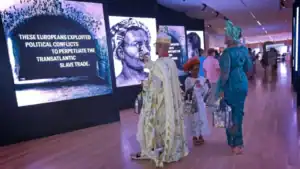
I found the visit very emotional. The building has a striking contemporary design. It is elevated off the ground to honor the hallowed ground below. It also includes the African Ancestors Memorial Garden.
The museum combines historic artifacts, rare photography and large-scale video installations to trace local, national and global Black histories.
There are nine galleries that explore topics including the Middle Passage, rice culture, the Jim Crow era and the modern civil rights movement.
There is also the Center for Family History, a genealogy and ancestry research resource that helps visitors trace their family histories and connect with the African diaspora.
The museum specifically invites contributions such as photographs, Bible records, funeral programs and other documents.
Afterthoughts
My wish after having visited the museum is that I could go back with my great-grandmother, who was born into slavery.
I met her when I was 4 years old, and she lived past 100. My maternal grandmother died before I was born, and my late mother was born in South Carolina.
In a recent conversation with my sister, I discovered that my mother spoke the Gullah language. If only I could go back in time. I have so many questions. Many of those questions are now being answered by our family historians, and we even recently found a missing branch on our family tree.
To Visit:
International African American Museum
Address: 14 Wharfside St., Charleston, SC 29401
iaamuseum.org
S.A. Lewis is an educator, certified functional nutrition counselor and licensed minister who founded Christian Quest Ministries in Cleveland.