By Marissa Valentine
As summer begins, Clevelanders make travel plans, whether by road or by air. Travel across the United States is increasing across various modes of transportation.
According to AAA’s fuel price site, gas prices for regular unleaded in the greater Cleveland area range from $3.82 to $4.85 per gallon, fluctuating almost daily as of June 6th. AAA listed the average price at $4.72 a month earlier and a year ago in June, unleaded gas was as low as $3.05 per gallon.
AAA has reported that summer demand can contribute to higher gas prices. Yet people continue to travel during peak season, raising the question: Is driving the cheapest mode of transportation for families?
Why road trips?
According to research by Longwoods International, American families spend $115 million annually for fuel on road trips. Of those surveyed, younger travelers are choosing ground travel as their primary mode of transportation for vacations. One factor is control over the journey.
Whether a vacation is 500 miles away or just a few hours by car, road trips offer flexibility and can be more affordable than flying. They also allow families to visit multiple cities en route.
Many families also choose to drive to offset the cost of flying with multiple children, or if their children have special needs or accommodations that are easier to manage by car.
Additionally, driving allows families to stop at multiple attractions or cities on the way to their final destination.
Another reason families value road trips, even though driving delays their arrival at their destination, is the opportunity for bonding time during their extended time together in the car.
How do road trips save money?
Historically, road trips have been thought to help families save money on extra airport costs, such as food, drinks, and baggage fees.
For example, on a road trip, families can pack as much food as they like or customize their meals if kids have food sensitivities or allergies, plus they can avoid the costs of airport food, which often exceed what you would normally pay at a fast-food restaurant.
The Parking Spot estimates airport food costs 10% to 15% more than comparable food outside airports because of vendor operating costs and rent.
Baggage is an additional cost for families who choose to fly. Southwest Airlines, one of the top choices for people looking to save on baggage, was the last airline to offer a free checked bag with a plane ticket purchase. According to the airline, Southwest implemented checked-bag fees on April 9.
If you are a family of five, the checked bag fees would cost approximately $175, starting at $35 per bag. If you check more than one bag with a single ticket, the next bag will cost $55. Many other airlines have similar or higher rates, increasing the total cost of travel for a family.
What affects flight vs. driving prices?
The average cost of a flight in the U.S. is based on several factors. The time of year, the airport you depart from, and the airport you arrive at are all determining factors that affect your ticket price.
Most importantly, like gas prices for vehicles, the cost of jet fuel and the popularity of the destination heavily influence airline ticket prices. According to the Bureau of Transportation Statistics data show fares vary widely by airport, route and demand.
Since flying in the summer is a high-demand time for consumers and airline corporations, flights are almost always more expensive during what airports consider peak season. If there are any holidays during this peak season, airline tickets will also be pricier as the demand to visit family or highly sought-after vacation spots increases.
“I chose to drive based on distance and who I travel with,” said Cleveland native, Martina White. “Flying is only an option for our family if it is cheaper than driving where we choose to go.”
The destination, number of travelers, and baggage are factors that increase flight costs, but some factors affect driving costs as well.
With current gas prices in Cuyahoga, Lorain and Summit counties hovering from $3.82 to $4.85 per gallon, the type of vehicle and distance driven will determine fuel costs.
Fuel-efficient vehicles reduce highway fuel costs compared with stop-and-go city driving. Websites like fuel economy.gov can provide you with estimates of your fuel costs.
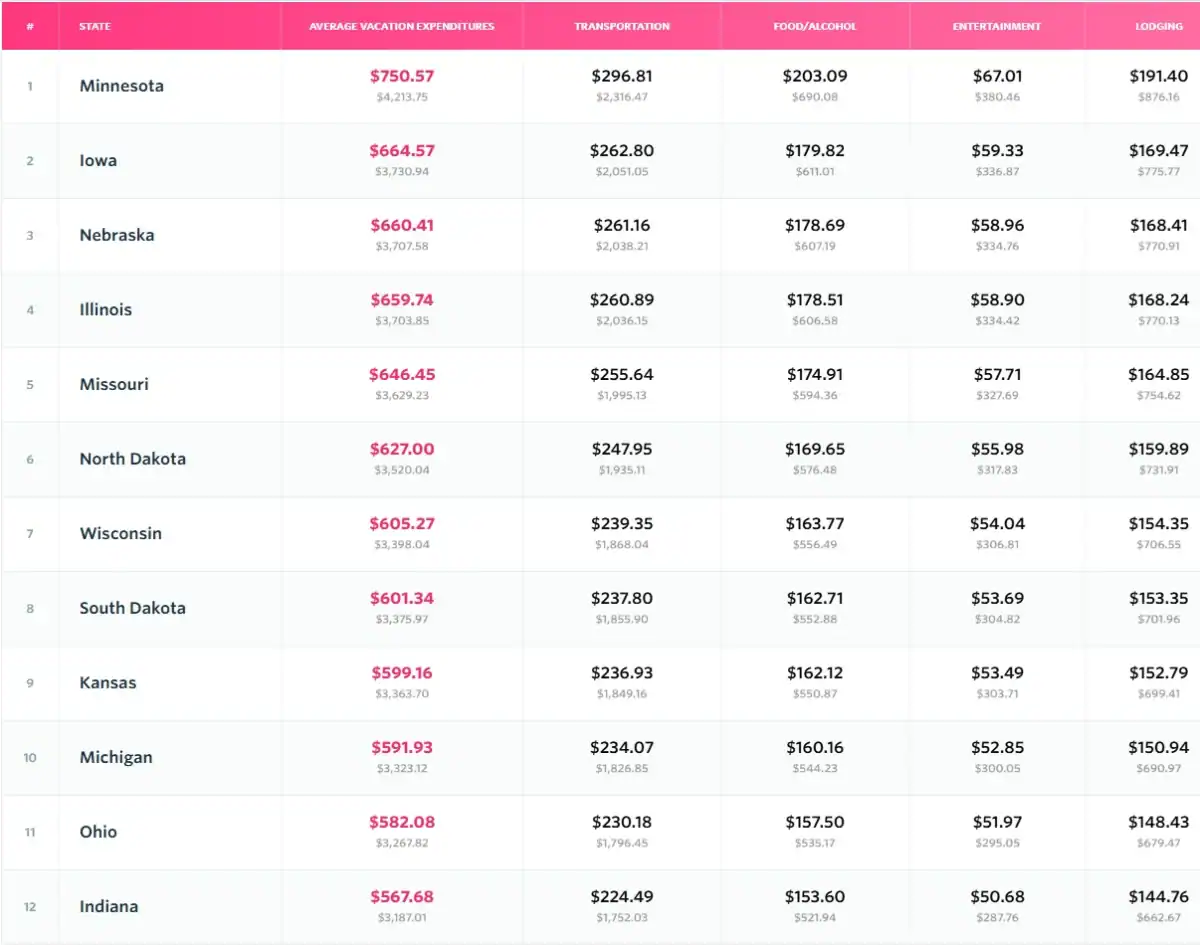
The Longwoods International chart shows how travel spending varies by state, including Ohio’s average vacation costs.
Additionally, the AAA website provides average gas prices for your state and surrounding states, updated daily, so you can also calculate fuel costs on the way back from your destination based on the gas prices where you are staying.
What other travel options exist?
An option for travel that might be considered a road trip in a more unconventional sense is Amtrak. Depending on where you’re visiting, it may not be cheaper than driving, but it could be less expensive than a flight if you are traveling with children. A round-trip train from Cleveland to Chicago costs approximately $900 if traveling with children.
A flight from Cleveland to Chicago, according to United Airlines’ website, if booked well in advance, is $117 per person for basic economy in June and $277 in July. If you are flying solo to a major hub like Chicago, the ticket price is affordable, but adding multiple children can cost $700 to $900, making it almost as expensive as an Amtrak ride.
While the train may be cheaper, flights are the faster mode of transportation.
Travel is a pastime that can build lasting memories for families.
If you are a family with multiple children, a flight may be the quickest mode of transportation, but it is often still the most expensive option.
Americans looking to save money on vacation continue the tradition of road trips, which are often a more economical and flexible way to visit multiple locations in one trip.
Marissa Valentine is a Navy veteran and journalist with 14 years of experience. She has a bachelor’s degree in communications.