By Staff Writer
A series of recent decisions by the Trump Administration could lead to tougher rules and more government scrutiny for nonprofits across the United States, including those serving communities in Cleveland and Ohio. These actions, announced between early September and late October, may affect how nonprofits use grant money, report their finances, and manage their daily operations.
On September 25, 2025, President Trump issued National Security Presidential Memorandum-7, directing federal agencies to investigate political violence and to look into the organizations and donors that may support such activity, according to The White House.The memo also allows officials to examine nonprofits or U.S. citizens living abroad for potential violations related to foreign influence or financial misconduct.
Earlier, on September 3, the President instructed the Attorney General to review whether federal grant funds are being used improperly for lobbying, as published in the Federal Register.Legal analysts at Arnold & Porter note that The Wall Street Journal reported the Administration is considering tightening IRS enforcement, potentially making it easier for the agency to pursue criminal tax cases.
Meanwhile, the National Council of Nonprofits says state attorneys general in several states have stepped up checks on charitable registration and filings.
Legal Experts Warn of Broad Impact
In a detailed advisory, the political law team at Covington & Burling LLP warns that these policies could bring new risks for nonprofits — especially those working in advocacy, civil rights, international partnerships, or politically sensitive areas.
Because the memo is written broadly, even organizations not involved in wrongdoing could face new questions about funding sources or programs.
IRS and Grant Oversight Could Shift
Covington’s analysis notes that possible IRS changes might increase scrutiny of nonprofit tax filings and donor reporting practices.
The September 3 memo also reminds federally funded organizations that grant money may not be used for lobbying or political activity. A separate advisory from Covington advises nonprofits to review their internal controls immediately to avoid violations.
State-Level Enforcement Rising
State attorneys general are also increasing oversight in several states. The National Council of Nonprofits reports that even small administrative errors — such as late filing or missed registration — can sometimes escalate into broader investigations.
Supporters Say Scrutiny Improves Safety
Some organizations say the new policies are necessary to address rising political violence. The Georgia Center for Nonprofits explains that NSPM-7 is intended to identify “networks, entities, and organizations that foment political violence” and argues that stronger oversight may help protect the public.
Opponents Warn of Chilling Effects
Others say the memo goes too far. The ACLU warns that its broad language could make “virtually protected expression” vulnerable to investigation.
More than 3,000 nonprofits signed an open letter claiming the directive could “punish nonprofit organizations [the administration] disagrees with,” according to Forbes Los Angeles. 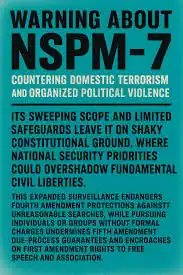
What Nonprofits Should Do Now
Covington recommends that nonprofits:
- Review governance and record-keeping practices
- Double-check any federally funded programs
- Understand risks related to foreign partnerships
- Strengthen donor documentation
- Make sure state registration filings are current
How This Affects Cleveland and Ohio
Ohio is home to several nationally and globally recognized nonprofits — including hospitals, universities, community organizations, arts institutions, and social-service networks.
For example, United Way of Greater Cleveland says it works on policy issues “at the local, state, and federal levels,” meaning changes to federal oversight can affect its advocacy efforts.
Large institutions have also commented on increased scrutiny across the sector. In a public statement reported by Axios, the Cleveland Clinic said:
“Cleveland Clinic remains committed to the communities we serve… The methodology used for this report does not fully align with how the IRS Form 990 categorizes community benefits.”
Local nonprofit leaders say that if organizations in Cleveland must shift time, staff, or funding to compliance duties, communities — especially those already under stress — could feel the effects.
Bottom Line
Federal memos, IRS enforcement signals, and new state rules point to a period of increased scrutiny for nonprofits. Covington’s advisory concludes that these actions “increase scrutiny of, and attention on, nonprofit organizations,” making accuracy, transparency, and compliance more important than ever.
AI Disclosure
This article was developed in partnership with the TCO AI Editorial Assistant using the TCO Editorial Style Guide for accuracy and sourcing. All articles assisted by AI are finalized and approved by The Cleveland Observer’s editorial staff before publication.