Russell Zhang
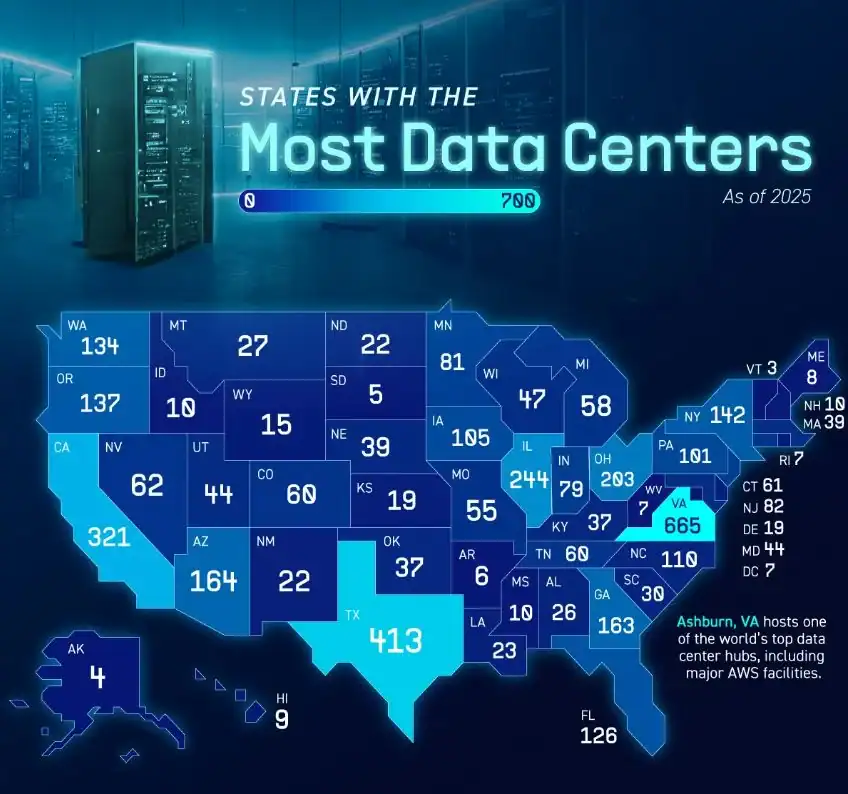
Driven by a recent surge in proposed hyperscaler projects from tech giants like Google, Amazon and Microsoft, Northeast Ohio is emerging as a key location for the massive infrastructure required to power artificial intelligence.
While Ohio as a whole already hosts more than 200 data centers, according to the Ohio Consumers’ Counsel, the arrival of these facilities in the Northeast region is sparking local debate over water consumption and long-term economic benefits.
Unlike traditional cloud services, AI models like OpenAI’s ChatGPT require significantly more computing power. According to the International Energy Agency, cited by the United Nations – Renewable Energy: Powering a Safer Future, a single AI-focused data center can consume as much electricity as 100,000 U.S. homes, a requirement that often pushes these facilities out of urban centers and into rural communities.
The environmental footprint is equally significant. Computers in these facilities generate intense heat and are often cooled with freshwater. In Newton County, Georgia, a Meta data center uses 500,000 gallons of water a day, about 10% of the county’s total consumption, according to reporting by The New York Times.
Local leaders in Ohio are taking action. Norton officials recently rejected a data center proposal, according to WKYC Channel 3, while Lordstown council members issued a six-month moratorium to study impacts on the power grid, noise pollution and water consumption, according to WFMJ Channel 21.
Despite these concerns, development continues. Plans have been proposed to convert an old GM warehouse into an AI data center through a partnership with OpenAI and Oracle, according to Business Journal Daily.
While such projects create short-term construction jobs, experts warn that the long-term maintenance of these sites employs only a fraction of the initial workforce, raising questions about sustainable local prosperity.
Community concerns
Beyond the infrastructure, the rapid rush to use AI has drawn criticism from those concerned about its true purpose.
“AI is supposed to be there as a support, not as a generative system,” said local observer Annalise Osei-Owusu. “It’s there so you can express what you want to convey the message you need, and support you instead of doing it for you.”
Others, like Zane “Sandelin, worry that the excitement over the technology has left behind critical discussions regarding intellectual property and student learning. Zane said concerns remain about the impact on academic integrity.
Russell Zhang is a Case Western reserve intern and freelance journalist and writer.