Kayla Blake
Voter turnout
A Gallup poll found that between 2020 and 2024, congressional approval never exceeded 36%. Gallup also found that trust in government and institutions was overwhelmingly low; only 9% of Americans had a great deal or quite a lot of confidence in Congress. This finding suggests that most people seem dissatisfied with their government. However, according to the Pew Research Center, many eligible voters did not vote in the 2024 election, especially people ages 18 to 29 years old.
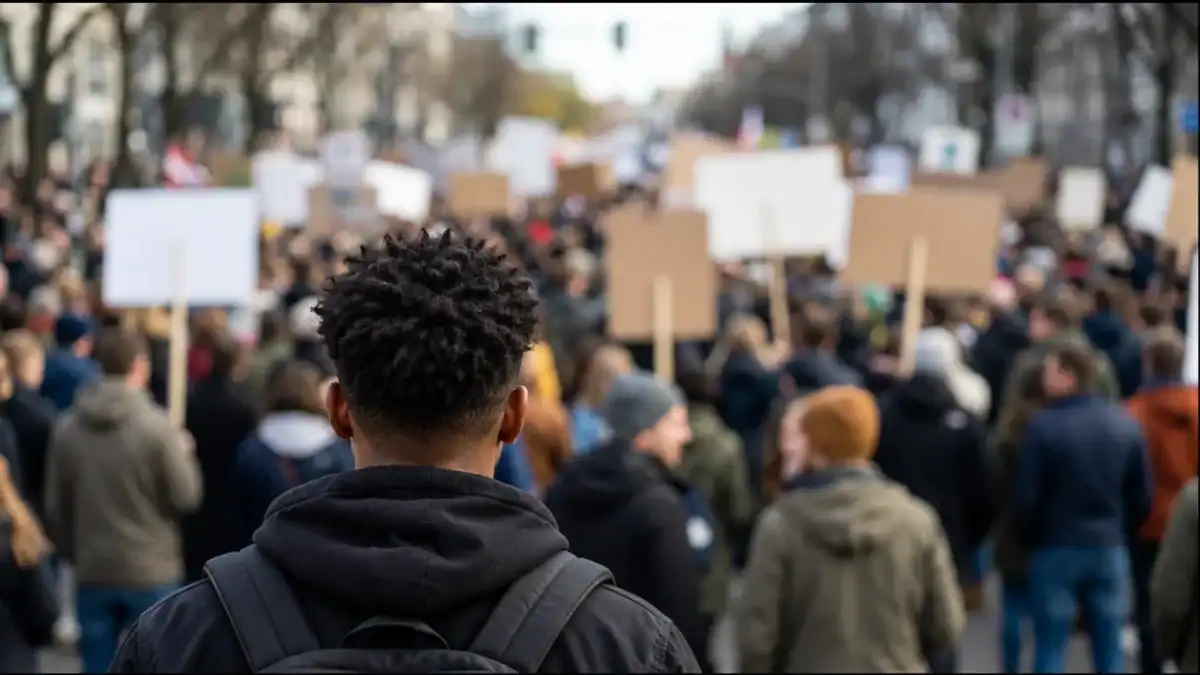
Young Americans, according to the Movement Voter Project, have lower levels of voter turnout than other age groups. Low voter turnout and disengagement are common in Gen Z (often defined as people born between 1997 and 2012). With important upcoming elections, young voters’ voices are crucial. These trends raise questions about why some young voters participate less in traditional political activities.
Regression and disappointment
Some older Americans have criticized Gen Z for low levels of electoral participation. Tom Nichols, a professor emeritus at the U.S. Naval War College, expressed frustration with young voters in a 2020 interview with the Carnegie Council for Ethics in International Affairs. “I have always been shocked that young people don’t bother because it’s not interesting and it’s not fun and it doesn’t feel like it’s having an immediate impact,” said Nichols. However, research shows that Gen Z is not necessarily politically apathetic. In fact, some researchers and political observers argue that Gen Z’s political behavior may reflect frustration with government institutions rather than disinterest.
The Rev. Martin Luther King Jr. often referenced the idea of an “arc of justice” in his speeches. King stated, “The arc of the moral universe is long, but it bends toward justice.” This quote suggests that as time moves on, our society becomes more equitable and justice will prevail. Gen Z has arguably witnessed the opposite happen over the past decade.
According to Amnesty International, especially since the current Trump administration, LGBTQ+ protections have been rolled back and violence against the LGBTQ+ community has proliferated. Similarly, diversity, equity and inclusion initiatives have been attacked. Women’s rights have been ignored; reproductive rights, particularly, have been negatively impacted the most. Lastly, environmental justice funds have been cut. Altogether, this suggests that much of the sociopolitical progress of the past few decades has been targeted.
Gen Z, as a result, has very limited trust in social and political institutions. A 2021 Springtide Research report found that 65% of people ages 13 to 25 disagree or strongly disagree that the government has done its best to protect them.
Gen Z is tired
A large portion of Gen Z’s political memory is marked by significant regression, especially for the most vulnerable populations. However, that does not mean that young people are apathetic- many are just skeptical and frustrated. The November 2025 Harvard Public Opinion Project polled 2,040 young people ages 18 to 29. Ultimately, researchers found that only 13% of respondents believed the country is headed in the right direction. The study also identified instability in young Americans’ lives, including “widespread financial, emotional and social strain.”
Gen Z is the first generation to live under the uncertainty of uncontrolled advanced AI, and it raises concerns about future employment and job security. According to Fight for a Living Wage, Gen Z also faces significant barriers to homeownership, including housing affordability, stagnant minimum wages and other inequalities. The current sociopolitical climate can be daunting for anyone, but especially for a young adult trying to build their life. This can result in fatigue when it comes to political activism and engagement.
Lack of change
Some Gen Zers feel as if government officials are not focused on benefiting the public. Merel Walker, a current undergraduate student at Cleveland State University, stated that she votes in every election and is very politically active. However, she believes that many other Gen Zers may be discouraged by a “lack of change.” Walker said, “We are told to use our voices, but my peers rarely see any real change that comes with voting.”
There is hope
Despite political disillusionment, Gen Z is largely very politically knowledgeable. Melissa Deckman, an American political scientist, stated in a September 2024 PBS interview that Gen Z is passionate about gender equality, climate change and preventing gun violence. Deckman stated that social media has also provided young people with additional avenues for political discussion and activism.
In other words, Gen Z’s political engagement just looks much different than older generations. Gen Z tends to prioritize social media and other nongovernmental strategies to create political impact. For example, many Gen Z women activists helped amplify the MeToo movement on digital platforms to speak out against misogyny and call for an inclusive democracy.
Younger voters also differ from older generations because of their political focus. According to New York Times writer Michelle Cottle’s December 2023 article titled “What Are Young Voters Looking For?”, younger voters are less interested in political parties and candidates, and more focused on advocacy around specific issues. As Cottle stated, “they are driven by issues that speak to their lives, their core values, or, ideally, both.”
“The Ballot or the Bullet”
Although Gen Z is politically involved in alternative ways, voter turnout is still extremely important. In 1964, civil rights leader Malcolm X delivered a speech here in Cleveland, Ohio, titled “The Ballot or the Bullet.” Malcolm X was deeply critical of the American political system. In that speech, he stated that the American government is “responsible for the oppression and exploitation and degradation of black people in this country”. Although he is referring to the Black American experience specifically, the sentiment is similar to Gen Z’s condemnation of the government. According to the National Museum of African American History and Culture, Malcolm X used this speech to encourage Black Americans to exercise their political power to make change- despite his systemic critiques.
When we vote
According to FairVote, high voter turnout is crucial for the health of our democracy. When we vote, we elect those who represent us, make decisions on important legislation and impact the state, local and national governments. APIAVote says that voting allows us to make decisions on health care, immigration, gun safety and even the potholes near your house. Abstaining from voting takes away community power. This midterm election, Gen Z voters have the opportunity to make a positive difference in American politics.
Freedom is a constant struggle
However, none of us should stop at voting. Although voting is a crucial first step, sustained community engagement is necessary to preserve democracy between elections. The Policy Circle states that voting, volunteering, public dialogue, advocacy and organizing are crucial. When we stay informed and active, we hold leaders accountable and strengthen our communities. As Angela Davis’ book title states, “Freedom Is a Constant Struggle”.
This election season, if you wants to make an impact, start by showing up to the polls. However, tangible change requires being active and engaged. This November, you are encouraged, everyone, young and old, to vote to protect democracy. Everyone is encouraged to keep up the momentum and fight for justice everyday.
Bio: Kayla Blake is a recent graduate of George Washington University.