Devon Jones
Editor’s note: Writer Devon Jones is a co-chair and founding member of the Black Men’s Health Council. The Cleveland Observer publisher Ron Calhoun is also a founding member.
Village of Healing (VOH) is a Cleveland-area health center that emphasizes culturally responsive care and operates locations in Cleveland and Euclid. It provides primary care, obstetric and gynecologic care, pediatrics and mental health services.
The organization says its model is designed to respond to patients’ social and cultural needs and to expand access to quality care for Black families.
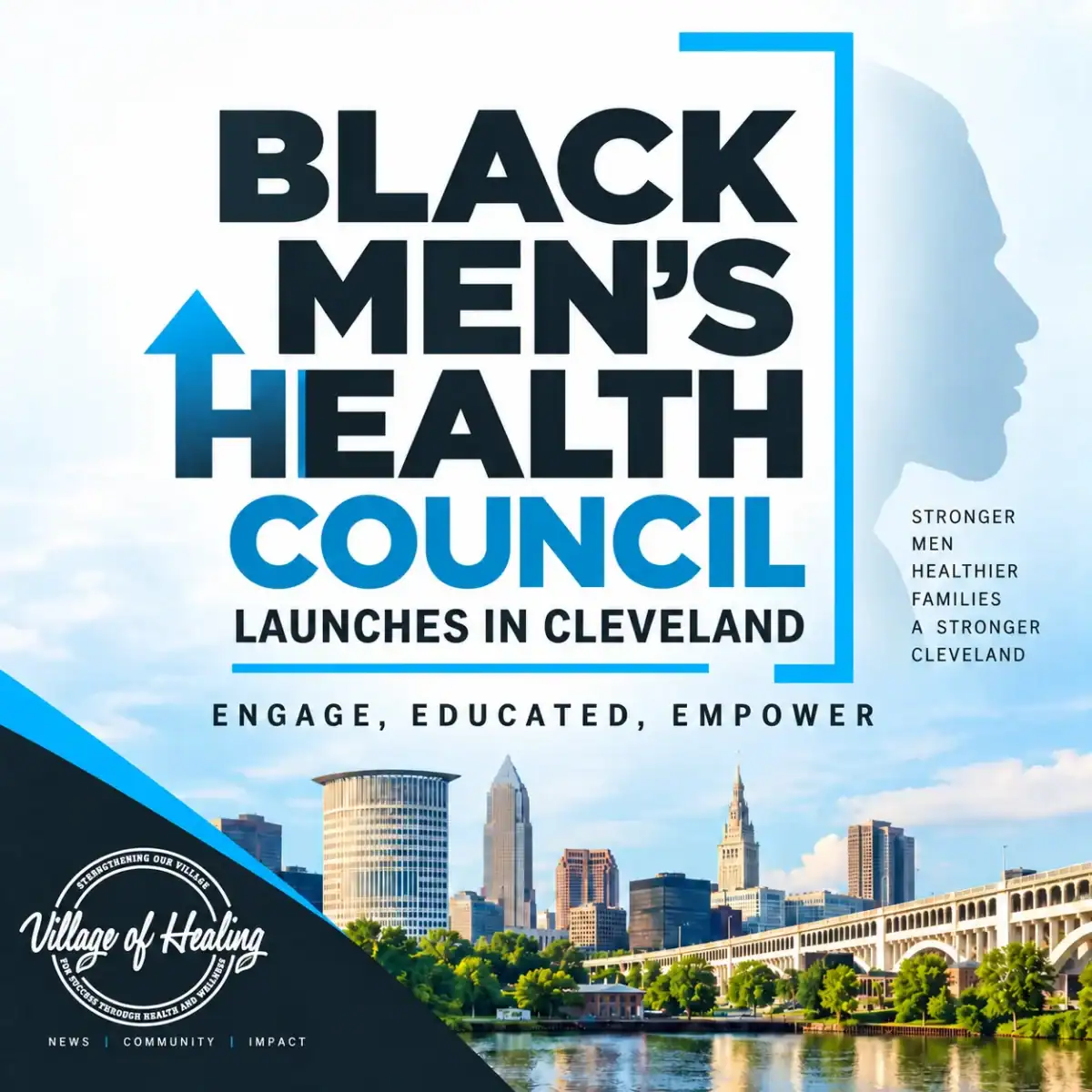
On Aug. 22, VOH further demonstrated its commitment to improving health outcomes by officially launching its Black Men’s Health Council, an initiative focused on advancing awareness, advocacy and access to care for Black men.
Health disparities the council seeks to address.
When discussing health outcomes in Cuyahoga County, it is important to acknowledge persistent racial disparities in life expectancy.
According to “Swimming Upstream: Getting to the Root Causes of Infant Mortality and Life Expectancy Outcomes in Cleveland, Ohio and the U.S.,” a report published by Cleveland State University in 2021, Black residents of Cuyahoga County had an average life expectancy of 73.6 years, compared with 78.3 years for white residents.
The report highlights that significant differences in health outcomes by race persist despite the presence of high-quality healthcare resources in the region, underscoring the influence of social and structural determinants of health on longevity.
Although these life expectancy figures reflect Black residents overall rather than Black men specifically, they could indirectly highlight broader inequities that disproportionately affect Black men. The committee feels the need to address the underlying social, economic and systemic factors that shape health outcomes in Cuyahoga County.
Multiple factors contribute to these inequities, including limited access to culturally competent healthcare, socioeconomic challenges and systemic barriers that impact health and well-being.
While numerous organizations and initiatives are working to address these disparities, many community members remain unaware of the available resources and efforts designed to improve health outcomes. Increasing awareness, engagement and access to trusted sources of care is essential to closing these gaps and advancing health equity for Black men throughout Cuyahoga County.
How is VOH addressing the health disparities?
The VOH Black Men’s Health Council was established to help address the health disparities experienced by Black men through collaboration, partnership and sustained community engagement.
The Council brings together community members, healthcare providers and health organizations who share a common vision of improving health outcomes for Black men across Greater Cleveland and surrounding communities. Guided by this mission, the Council focuses on three key strategic pillars:
Expanding Holistic Care: Streamlining equitable access to comprehensive healthcare services designed specifically for the unique medical and social needs of Black men.
Cultivating Trust and Leadership: Fostering community-led engagement to heal historical medical mistrust and build reliable leadership pipelines.
Advancing Health Equity: Educating families, amplifying local voices and systematically breaking down barriers that prevent men from taking charge of their health.
Through these efforts, the Council seeks to create meaningful, lasting change by addressing barriers to care, fostering strong community partnerships and empowering Black men to take an active role in their health and well-being.
The council’s founding members include co-chairs Dr. Roderick Harris and Devon Jones and members Ron Calhoun, Dr. Stephen King, Pastor Kyle Early, Pastor Dwayne Simmons, James Wade III and Timothy Hamilton.
The council is actively seeking local healthcare providers, community leaders and residents who share this vision for Greater Cleveland. To learn more about the initiative, find clinic locations or join the council, visit the official Village of Healing website.
Jones, who serves as a co-chair of the council, said: “If we are to improve the health outcomes of men of color, we have to be intentional about building trust and addressing the barriers of access to care. Black men are at a high risk of dying from preventable diseases and it’s essential that we address this disparity through coordinated and intentional action. That’s what the council intends to do, one man at a time, one event at a time, one screening at a time until we make a difference.”