

Marissa Valentine
Federal cuts to public broadcasting funding are affecting young viewers nationwide. Public broadcasting which provides free educational programming to children across the country has lost federal funding through the Corporation for Public Broadcasting (CPB). This loss of funding limits access to educational programming in marginalized communities.
According to a Jan. 6 CNN report, Congress cut funding for both the Public Broadcasting Service (PBS) and National Public Radio (NPR).
“CPB’s final act would be to protect the integrity of the public media system and the democratic values by dissolving, rather than allowing the organization to remain defunded and vulnerable to additional attacks,” said CPB President and CEO Patricia Harrison.
Programming that positively impacted the childhood and adolescence of many Americans now hangs in the balance, supported by community investment through donations.
For six decades, Cleveland-area residents have turned to PBS Western Reserve and Ideastream Public Media for reliable, factual sources of educational information and news.
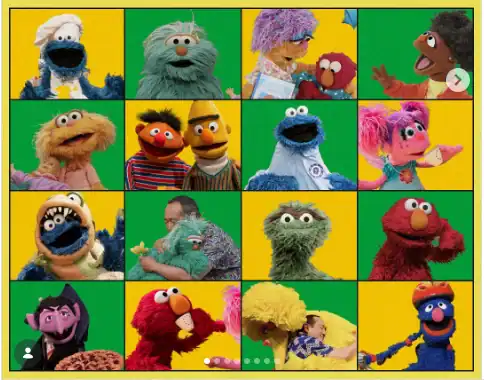
Known for shows like “Sesame Street,” “Mr. Rogers’ Neighborhood,” “Arthur,” “Sid the Science Kid,” “The Magic School Bus,” “Clifford,” “Barney & Friends,” “Wild Kratts” and “Wishbone,” public broadcasting has long been home to some of the most popular children’s shows.

PBS cuts hit low-income communities
The conservative policy document “Mandate for Leadership: The Conservative Promise,” subtitled “Project 2025,” argues that public funding of domestic broadcasting is misguided.
In the section titled “Corporation for Public Broadcasting,” author Mike Gonzalez writes, “To stop public funding is good policy and good politics.”
The document also expresses concerns about bias, stating, “PBS and NPR do not even bother to run programming that would attract conservatives.”
Last summer, federal leaders moved to cut funding for the Corporation for Public Broadcasting, which supports local PBS and NPR stations.
In a May 2025 executive order titled “Ending Taxpayer Subsidization of Biased Media,” President Donald Trump wrote that “neither entity presents a fair, accurate or unbiased portrayal of current events to taxpaying citizens.”
While budget cuts are common across administrations, decisions that affect free educational programming disproportionately impact low-income communities, where affordability and access remain barriers.
PBS offers educational programming at no direct cost, unlike many streaming services that charge monthly fees. Its shows build skills like problem-solving, critical thinking and social-emotional learning, while promoting cultural awareness and inclusivity.
Why free access to education matters
Free access to diverse educational programs at home through PBS programming does not appear to be a priority of the current administration. Long-standing shows like “Sesame Street,” “Curious George,” and “Arthur” intentionally feature diverse families and cultures. Project 2025 states, “The next conservative president must finally get this done and do it despite opposition from congressional members of his own party if necessary.”
Many adults born between 1981–1996, referred to as millennials, regularly reflect on the shows that helped them navigate complex emotions and personal situations as they grew up. One personal example is a Mr. Rogers’ episode that aired on Oct. 19, 1995, in which Mr. Rogers talks about mad feelings and how children can cope with them.
Today, millennials can relive these nostalgic moments by sharing PBS spin-offs of their favorite shows with their children. “Daniel Tiger’s Neighborhood,” like its predecessor, “Mr. Rogers’ Neighborhood,” centers on age-appropriate social-emotional themes. Additionally, shows like “The Magic School Bus” simplify difficult scientific concepts to make them understandable to young audiences.
What can you do?
The push to eliminate public funding for educational programming that defined visual learning and made concepts fun and easy to learn is part of the conservative viewpoint within “Project 2025” stated, “the government should not be compelling the conservative half of the country to pay for the suppression of its own views.”
If you support PBS, there are several ways to help sustain public media:
Donate to your local public media station, such as Ideastream Public Media.
- Follow local stations on social media to show your support.
- Use the PBS app to support viewership and access to programming.
Support does not have to be financial. Sharing content on platforms like Instagram, Facebook and Threads can help expand access to educational programming.
Marissa Valentine is a U.S. Navy veteran and journalist. She writes about community, education and public policy.